
Structured Cabling & Wi-Fi: The Backbone Your Cameras Depend On
When people invest in security cameras, they focus on the cameras themselves—resolution, night vision, field of view. Those things matter. But there's a quieter part of the system that decides whether your cameras actually work when you need them: the network they run on.
At SmartConnect L.A., we've seen plenty of camera systems fail not because the hardware was bad, but because the cabling and Wi-Fi behind them were an afterthought. If the backbone is weak, even the best camera in the world will drop frames, go offline, or leave you staring at a spinning loading icon during the exact moment you needed footage.
Here's what every property manager, business owner, and homeowner should understand about the infrastructure that makes surveillance dependable.
Why the Network Is the Real Foundation
Modern cameras are essentially small computers. They capture video, compress it, and send it across your network to a recorder, a server, or the cloud. If that pathway is unreliable, everything downstream suffers.
A poorly built network shows up in familiar ways:
- Choppy or frozen footage that makes an incident unusable as evidence.
- Cameras that randomly go offline and don't reconnect until someone reboots equipment.
- Delays in live viewing, so what you see on your phone is seconds or minutes behind reality.
- AI features that stall, because threat detection and analytics need steady, high-quality data to function.
You can't fix these problems by buying nicer cameras. You fix them by building the backbone correctly from the start.
Structured Cabling: Boring, Essential, Worth Doing Right
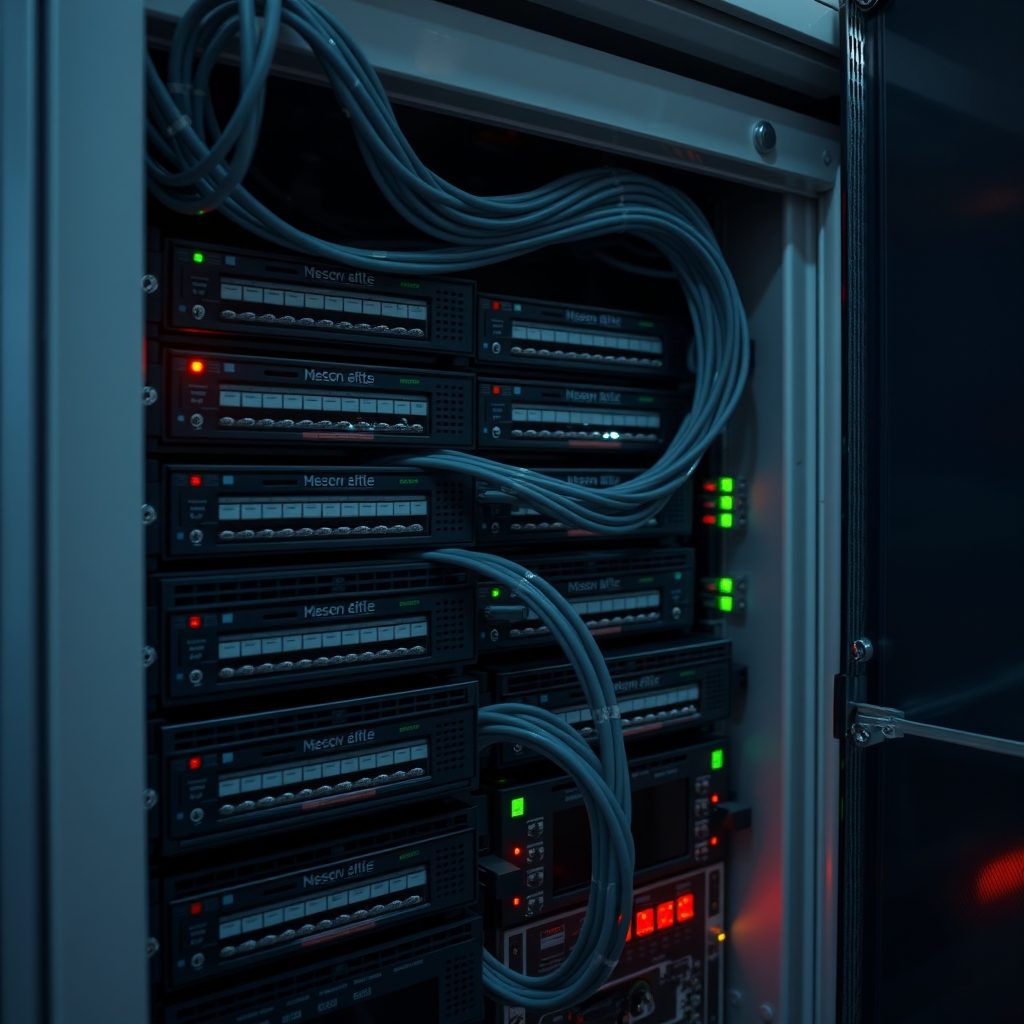
Structured cabling is the organized system of network cables, patch panels, and connection points that ties your building together. It isn't glamorous, but it's the difference between a system that lasts a decade and one that gives you headaches every month.
For camera systems specifically, structured cabling delivers a few key advantages:
- Power and data over one cable. Most professional cameras use Power over Ethernet (PoE), meaning a single cable carries both the video signal and the power. That reduces clutter, cost, and points of failure.
- Consistent, high-bandwidth connections. Wired links don't compete with microwaves, walls, or neighboring networks the way Wi-Fi does.
- Easier troubleshooting. When cables are labeled, documented, and terminated properly, finding and fixing an issue takes minutes instead of hours.
- Room to grow. A well-planned cabling layout lets you add cameras, door readers, and access points later without tearing walls open again.
The cable quality and installation both matter. Runs that are too long, poorly terminated, or routed near electrical interference can quietly degrade performance in ways that are hard to diagnose later.
Where Wi-Fi Fits—and Where It Doesn't
Wi-Fi has a role in a modern security setup, but it's important to use it wisely. Wireless is convenient for devices that are hard to reach with cable, for certain residential cameras, and for the phones and tablets you use to check in.
That said, we generally recommend hardwiring cameras whenever it's practical. Wireless signals are shared, interference-prone, and affected by everything from thick walls to the number of devices competing for airtime. For a critical security camera watching an entrance or a cash-handling area, a wired connection is simply more dependable.
When Wi-Fi is the right choice, the setup still needs to be done thoughtfully:
- Enough access points to cover the space without dead zones.
- A separate network for cameras and security devices, kept apart from guest and staff traffic.
- Proper placement so signals reach where they're needed instead of being blocked by walls or equipment.
Good Wi-Fi design is about coverage and reliability, not just plugging in a router and hoping for the best.
Security and Segmentation Belong in the Plan
Your cameras and access control devices live on your network, which means they can also be a target. A camera system connected to the same network as everything else can become an entry point for someone trying to reach more sensitive data.
That's why we build networks with segmentation in mind, keeping security devices on their own isolated network. This limits exposure, keeps performance predictable, and makes it easier to monitor for unusual activity. It's a step that's easy to skip and expensive to ignore.
Plan the Backbone Before You Buy the Cameras
The most common mistake we see is buying cameras first and thinking about the network second. It should be the other way around. Once you know how many cameras and access points you'll need—now and in the near future—you can design cabling and Wi-Fi that support them without compromise.
A little planning up front saves money, prevents downtime, and gives you a system you can actually trust when something happens.
If you're planning a new camera system or struggling with one that keeps dropping offline, we're happy to take a look. Call SmartConnect L.A. at 310-893-0878 to book a free assessment, and we'll help you build a backbone your cameras can depend on.
Want this protecting your property?
Talk to a local SmartConnect L.A. specialist — no pressure, no jargon.
Get a free assessment